Scaling design consistency across JPMC employee platforms
September 2025 - present
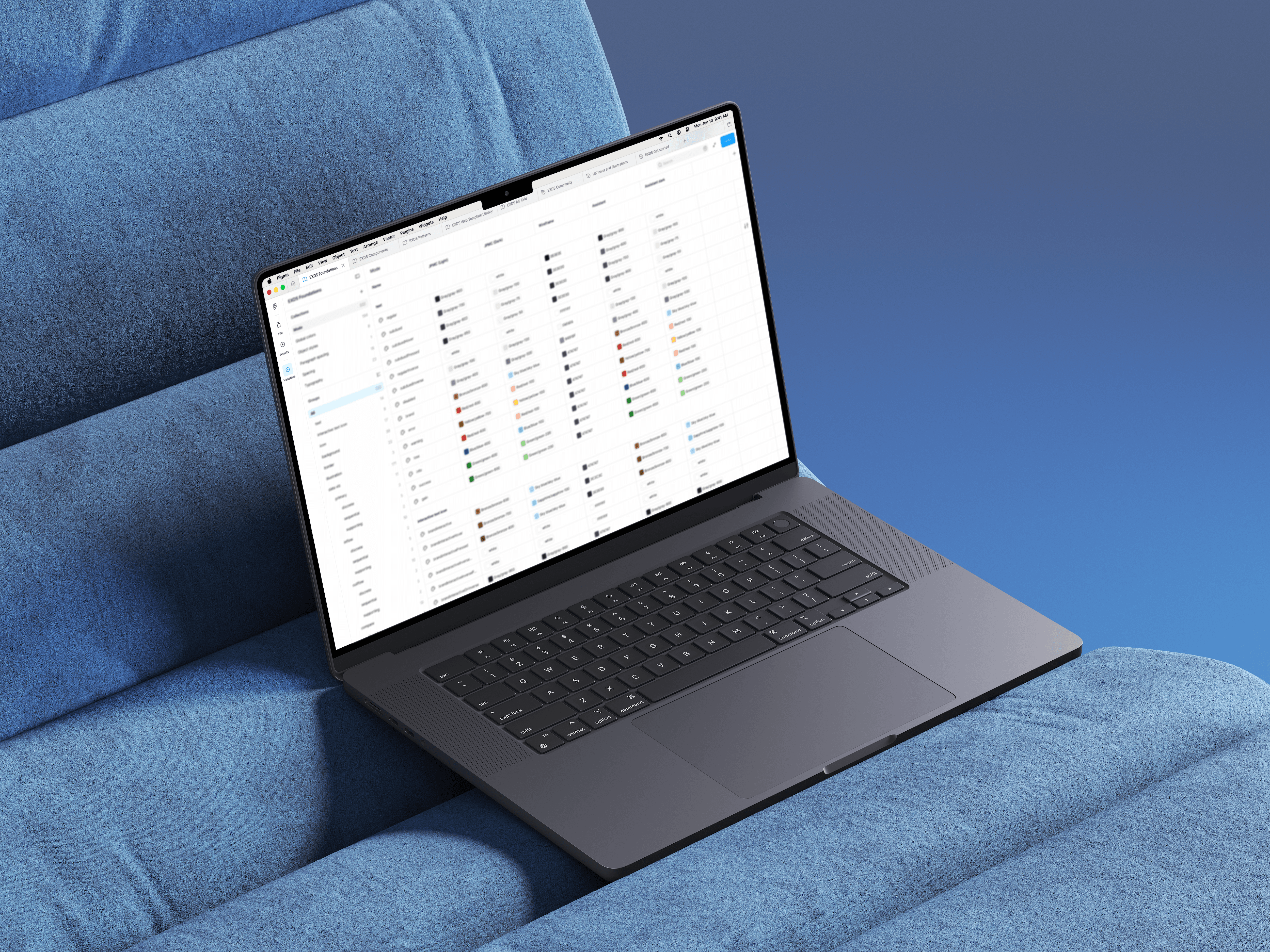
I help build the foundations that enable teams to design and ship more consistent, scalable, and accessible experiences. My work spans components, patterns, governance, and adoption initiatives across the ecosystem.
Overview
Problem
Internal product teams were designing similar experiences in different ways. Missing patterns, inconsistent components, and gaps between design and code created inefficiencies that slowed teams down and resulted in fragmented employee experiences.
Solution
I partnered with designers, engineers, and product teams to strengthen reusable foundations, establish shared patterns, improve design-to-development alignment, and increase adoption across the organization.
Context
Why a design system alone wasn't enough to create consistency
When I joined EXDS, many teams were solving the same design problems independently.
Forms behaved differently across products. Notification experiences lacked consistency. Teams often created custom solutions when reusable foundations did not exist or were difficult to discover. In some cases, what existed in Figma did not fully align with implementation, creating additional friction during delivery.
As the employee ecosystem continued to grow, these inconsistencies increased both maintenance costs and design complexity.


JPMC Employee Experiences
Why this matters?
The challenge was not simply visual consistency.
Inconsistent patterns increased implementation effort, created accessibility risks, and made it harder for teams to deliver cohesive employee experiences. Every team solving the same problem differently resulted in duplicated effort across the organization.
Improving the system meant improving how products were built, not just how they looked.
Our approach
Building the system behind the system
As EXDS continued to mature, we recognized that consistency could not be achieved through components alone.
Creating a scalable design system required solving challenges at multiple levels: establishing reusable foundations, defining shared patterns, exploring new ways to improve design efficiency, and ensuring teams could successfully adopt the system over time.
To guide our efforts, we focused on three strategic areas:
01
Strengthen the foundations through reusable components and design tokens.
02
Reduce fragmentation through shared patterns and experience guidelines.
03
Explore how AI could improve design workflows and increase team efficiency.
Phase 1 — Strengthening foundations
Creating the reusable building blocks
The first priority was strengthening the reusable foundations available to product teams.
As the employee ecosystem expanded, teams frequently encountered scenarios where existing components did not fully support their needs. These gaps often resulted in custom solutions that increased design and engineering effort while introducing inconsistencies across products.
To address this, I contributed to the design and documentation of foundational components including Selectable Tile, Tile Group, Checkbox Group, Calendar, Date Picker, Date Range Picker, File Uploader, and Icon Button. I also partnered closely with engineers to improve alignment between Figma and React implementations, helping ensure teams could move seamlessly from design to development.

Reusable design components (NDA)
By expanding the component library and improving implementation consistency, we established stronger foundations for teams building employee experiences across the organization.
Phase 2 — Standardizing through patterns
Establishing shared design patterns
While reusable components solved individual interface needs, many teams still approached common workflows differently.
Forms, validation behaviors, and notification experiences often varied from product to product, creating fragmented interactions even when teams used the same components.
To address these inconsistencies, I led several pattern initiatives focused on high-impact user experiences. This included establishing guidance for forms and validation patterns, as well as defining notification principles across channels. These patterns provided teams with shared approaches for handling common workflows while maintaining flexibility for product-specific needs.

Forms pattern (NDA)

Notifications pattern (NDA)
Establishing the foundation rules that bring consistency across products
At the foundation level, teams also faced challenges with spacing decisions and layout structures. Without clear standards, products often developed their own approaches, making experiences feel inconsistent across the ecosystem.
To improve alignment, I contributed to grid and spacing foundations that established a common framework for layout and visual rhythm. These standards helped teams create more cohesive experiences while reducing design and implementation variability.

Design foundations (NDA)
Rather than prescribing individual solutions, the goal was to create shared frameworks that helped teams make better design decisions at both the pattern and foundation levels.
Together, these efforts shifted EXDS beyond a component library and toward a more comprehensive system for designing experiences.
Phase 3 — Exploring AI-Powered design workflows
Reimagining design systems as active collaborators
As design systems become more mature, a new challenge emerges: helping teams work more efficiently, not just more consistently.
Beyond components and patterns, we began exploring how AI could support designers throughout the design process. Rather than focusing on AI as a standalone feature, we investigated opportunities to reduce repetitive work, accelerate exploration, and improve access to system knowledge.
Our exploration focused on questions such as: How might designers discover relevant patterns more quickly? How can teams navigate large design systems more efficiently? And how might AI help reduce the time required to move from problem definition to solution exploration?
While much of this work remains exploratory, it represents an important evolution in how design systems create value—not only by providing reusable assets, but by helping teams make better decisions faster.
Driving adoption and governance
Design systems scale through people, not components
Building a design system is only half the challenge. Ensuring teams understand, trust, and adopt it is equally important.
To support adoption, I regularly facilitated office hours, design consultations, workshops, and design forums where teams could review work, discuss challenges, and provide feedback on system needs. These sessions created valuable feedback loops between product teams and the EXDS team while helping designers discover existing solutions before creating new ones.

Design office hours template (NDA)
Through these governance efforts, we gained a deeper understanding of where teams struggled, identified opportunities for future investments, and strengthened alignment across the organization.
This work helped position EXDS not simply as a collection of assets, but as an active partner in helping teams build better employee experiences.
Outcomes
A long-term bet on consistency across internal products
The work strengthened the foundations of the EXDS ecosystem and helped teams build more consistent employee experiences at scale.
By expanding reusable foundations, establishing shared patterns, and increasing adoption through education and governance, we reduced fragmentation across products and improved alignment between design and engineering. More importantly, we helped shift the role of EXDS from a component library to a strategic platform that enables teams to build and scale experiences more effectively.
While the system continues to evolve, these initiatives established a stronger foundation for consistency, accessibility, and long-term scalability across JPMorgan Chase's employee product ecosystem.
My role and contributions
Building reusable foundations while helping teams adopt
As a Product Designer on the EXDS core team, I help shape the foundations that power employee experiences across JPMorgan Chase.
My work extends beyond designing individual components. I partner closely with product designers, engineers, researchers, and product managers to identify gaps within the system, define scalable solutions, and improve consistency across the broader ecosystem. In addition to component design, I lead pattern initiatives, facilitate cross-functional workshops, support adoption through design consultations, and help align design and engineering implementation.
Because EXDS is still a relatively young design system, a significant part of my role involves balancing immediate product needs with long-term system health. My focus is not only on building reusable foundations, but also ensuring those foundations are adopted, understood, and maintained at scale.